CES 2026: 3 major takeaways from Nvidia Live
Author
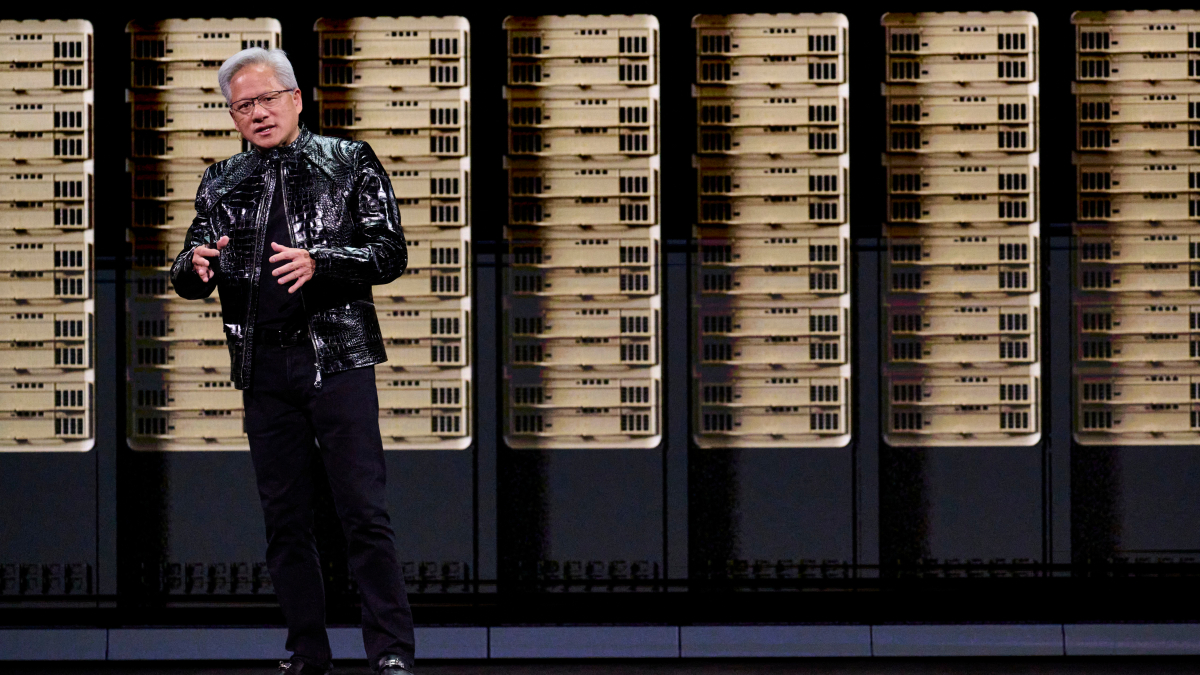
It’s hard to say whether Nvidia: ever really subtle with his statements. At last year’s CESCEO and founder Jensen Huang stunned the industry with his debut GeForce RTX 50 series with Nvidia Cosmosits ambitious initiative of a global model. This year’s show was more subdued on the consumer GPU front, but the message CES 2026 The attendees were still unmistakable. Nvidia wants it all.
“All” is not hyperbole. Nvidia is now the first company ever exceeds $5 trillion in value — an almost unfathomable figure — and Huang and company show no signs of slowing down. The company’s ambitions now include factories, autonomous vehicles, robotics, and almost any domain that can be trained, tested, or perfected in simulation before hitting the real world. If something can be modeled, Nvidia wants to power it.
Nvidia’s real obsession is physical AI
The biggest word of the night was “physical AI,” Nvidia’s term for AI systems that don’t just create content, but actually act. These models are trained in virtual environments using synthetic data and then deployed to physical machines once they learn how the world works.

Credit: Bridget Bennett/Bloomberg via Getty Images
Huang showed Cosmos, a global foundation model capable of simulating environments and predicting movements, along with Alpamayo, which is specifically designed for autonomous driving. It’s the technology Nvidia says will power robots, industrial automation and self-driving cars, as demonstrated by the Mercedes-Benz CLA, which was shown on stage with an AI-defined car. The company also revealed plans to test its own robotaxi service with a partner in 2027, using Level 4 autonomous vehicles that can drive without human intervention in limited areas.
Nvidia hasn’t announced where the service will launch or who it’s partnering with, but the move signals a shift from being a behind-the-scenes provider to an active player in the self-driving race. Huang has already described robotics, including autonomous vehicles, as Nvidia’s second most important growth category after AI itself.
Mashable speed of light
No new GPUs
If you’ve been waiting for new consumer GPUs, you probably quickly noticed that there aren’t any. Nvidia didn’t announce any new GeForce cards, and that seems to be quite intentional. Instead, Huang spent most of the keynote talking about Rubin, Nvidia’s next-generation AI platform, which is already in full production.
Ruby is described as more than just a chip, but an entire system. GPUs, CPUs, networking, and storage are all designed together for a huge (and environment-changing) to calculate the requirements of modern AI models at data center scale. Nvidia identified this as important to keep up with the growing demand for AI, where training costs, power usage and bottlenecks are becoming existential issues.
The lack of gaming hardware shouldn’t be seen as a shame, but it’s clear that Nvidia is no longer driven by gamers. It’s been kind of clear that this has been going on for a while, but today’s conference really put the nail in the coffin. Instead, the company’s ambitions are driven by hyperscalers, governments, and anyone else trying to automate everything that moves.
“Open” AI, powered by Nvidia hardware
The third major step was Nvidia’s continued push to make itself inevitable through openness, or at least Nvidia’s version of it. Huang has repeatedly emphasized that the company isn’t just selling hardware, it’s opening up AI models that developers can actually use, tweak, and implement (not to be confused with the ChatGPT developer. OpenAI:) Nvidia now has open models covering healthcare, climate science, robotics, embodied intelligence, logical AI, and autonomous driving, all of which have been trained on Nvidia supercomputers and released as basic building blocks. They have practically become the corn of technology.
Even personal AI agents got some stage time, with demonstrations of local agents powered by Nvidia’s DGX Spark hardware. Nvidia aims to be the platform under all AI systems, from massive data centers to personal desktops. It’s an elegant strategy to sell openness but still have the pipes.
Altogether, the keynote speech felt like a proclamation. Nvidia is no longer chasing CES hype cycles. It positions itself as the backbone of an AI-powered world where the most important announcements aren’t made on stage and the most impactful products aren’t designed to fit under your desk.