Are ‘Alien: Earth’s’ human/robot hybrids a peek at our Neuralink-enabled future?
Author
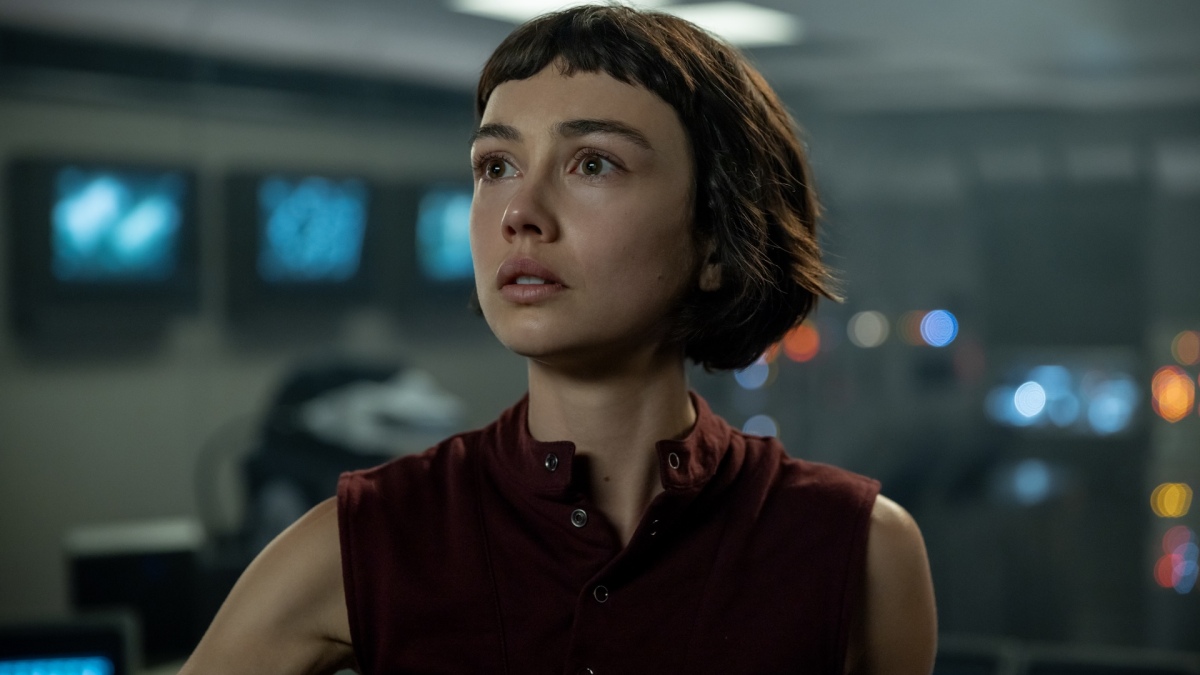
in the middle of Alien. Country:of In the first episode, the show’s main character, an android uploaded with the consciousness of a dying child, asks in shock: “If I am not human, what am I?” At the end of the episode “hybrid“known as Wendy (Sydney Chandler) confidently declares. “I a.m man.”
Noah Hawley’s new FX series It owes much of its style to the original 1979 Alien moviebut thanks to its hybrid hybrid plot, its narrative drive is more like; Alienthe divisive premises of Prometheus and: Alien. Covenantand a crowd-pleasing secondary, Alien. Romulus. With Wendy and her hybrid cohorts, Hawley is able to explore the flexible definition of “human” beyond the confines of a two-hour film.
In the show, Wendy is a new version of 11-year-old Marcy (played by Florence Bensberg) who succumbs to a terminal illness. Prodigy Corp. CEO and Trillionaire Boy Cavalier (Samuel Blenkin) Marcy is convinced that she can live forever by downloading her brain activity into the “body” of a powerful android. After Marcy’s successful transition to Wendy (and beyond Marcy’s death), Prodigy secretly downloads several more terminal child androids, all physically designed as young adults but thinking, reasoning, and emoting as before.
Wendy tells her new hybrids that Prodigy needs young brains to create their new forms because adult noggins don’t fit inside androids. That’s it science fiction and the narrative necessity that probably dictates this demarcation between adults and children, but the attempt to translate neural activity into code is not far off. NeuralinkFounded by Elon Musk (who shares some similarities with Kavalier), it has been developing implantable brain-computer interfaces for nearly a decade with the goal of helping people with disabilities regain mobility and independence through technology. Musk announced last year Neuralink has introduced its first brain chip in man.
“[The chip] lets you control your phone or computer, and almost any device through them, just by thinking.” Musk tweeted at the time. “The initial users will be those who have lost the use of their limbs. Imagine if Stephen Hawking could communicate faster than a fast typist or an auctioneer.”
Implantation of Neuralink chips in a quadriplegic patient has yielded some successful results. but didn’t go exactly as planned.
Mashable Top Stories:
Shall we play God?
David Ryan Polgar is the founder and president of the non-profit organization All technology is humanwhich works with Silicon Valley companies and organizations on ethics issues. Polgar draws a clear line between what Neuralink is allegedly pursuing and what Prodigy is doing.
“Although there are well-known companies like Neuralink working on brain-computer interfaces, the process of uploading human consciousness to a synthetic body is still very speculative,” Polgar told Mashable. “The enormous technical hurdles and ethical dilemmas of uploading human consciousness haven’t completely thwarted the futurists’ predictions, which is why the concept works Alien. Country: as hybrids.”
Professor Carlos Gershenson-Garcia, the Empire Professor of Innovation at the State University of New York at Binghamton, says tech companies are years away from putting our souls into robots or computer chips. (Alien. Country: takes place about 100 years in the future, so they have time to catch up on the show.)
“The main problem is that we still don’t understand what consciousness is, how it works in us and in other species,” says Gershenson-Garcia. “We assume that our brain has to do something with it, but we don’t know which mechanisms are responsible for it. Is it at the neuronal level, at the molecular level, at the quantum level?
If companies like Neuralink really have ambitions to transmit human consciousness, will they collaborate with ethicists and thinkers like Polgar or Gershenson-Garcia, or will they do it in secret, like the fictional Prodigy Corp.? Gershenson-Garcia hopes the former is true, saying that no matter what form they take, “building conscious machines creates moral responsibilities that we may not be prepared for.”
For Polgar, he is full of questions very similar to the ones being raised Alien. Country:.
“The prospect of uploading human consciousness raises the larger questions of whether the result is a continuation of the individual’s life or a new, altered being, and whether the quest to live forever is a worthwhile pursuit,” he says. “Living forever is the ultimate Faustian bargain, a desire that should never really be pursued or accepted. Paradoxically, the beauty of life is linked to its fragility. So while uploading consciousness to live forever is a dream for many, it will lead to a dystopian future for all of us.”